




Facilities management is often measured through standards, audits and KPIs. But behind all of that sits something far more influential: The people delivering the service.
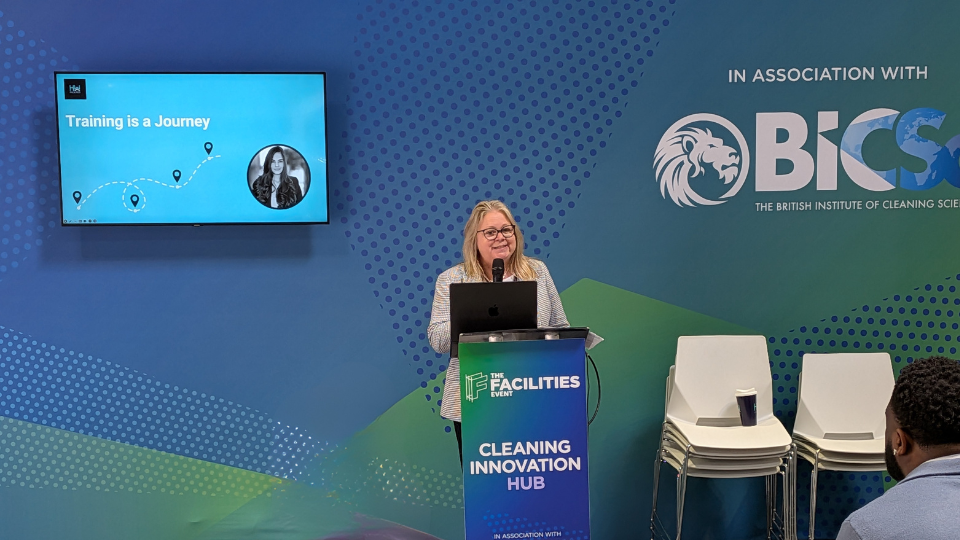
At The Workplace Event, in April, our Head of HSEQ Jan Marriott explored what really impacts whether cleaning operatives stay and succeed, and why this matters for the environments we – and our clients – manage.
Service Quality Starts With People
Cleaning is often seen as a task-based service. In reality, it is highly dependent on people who understand your site, your standards and your expectations.
When teams are consistent, the difference is clear:
- Standards are more reliable
- Issues are picked up earlier
- Operatives take ownership of the space
When turnover is high, that knowledge is lost and the service resets.
In our sector, some movement is natural. Roles are often part-time, and people’s circumstances change. But if experienced, engaged team members are leaving, that directly impacts:
- Continuity
- Familiarity with your environment
- Overall service consistency
Therefore, we need to track who is leaving and why.
Cleaning is a Profession
A common misconception in our industry is that “anyone can clean.” In reality, commercial cleaning requires:
- Training and technical understanding
- Awareness of safety and standards
- The ability to work independently and make decisions
When this is recognised, teams are more likely to take pride in their work and stay longer as a result.
As a BICSc Accredited Training Member, we deliver structured, competency‑based training to every cleaner, supervisor and manager.
This includes:
- Licence to Practice and role‑specific skills
- Ongoing assessment and development
- Opportunities for progression into supervisory and management roles
Many of our Managers started as cleaning operatives and through our support and training have made impressive progression.
What Drives Retention
One of the key takeaways from the presentation was simple: Retention is shaped by everyday experiences, not one-off initiatives.
It comes down to:
- How people are introduced to the site
- How expectations are set
- How supported they feel in their role
The first few weeks are especially important and often determine whether someone stays or leaves.
From our experience, there are three factors that make the biggest difference. The most stable and high-performing teams are built on:
Clarity: People know what is expected and what good looks like.
Capability: They have the training and support to do the job well.
Connection: They feel part of a team and not just a name on a rota.
What This Means for Service Delivery
When these foundations are in place, we have found our cleaning teams become more confident, more consistent and more invested in the environment they are responsible for.
For our clients this means:
- Fewer service issues
- More proactive delivery
- Stronger, more reliable standards over time
Retaining people isn’t just about keeping numbers stable. It’s about building teams who understand their working environment and take pride in maintaining it. As a result, the workplaces we are responsible for feel well managed, well cared for and consistent for their users.